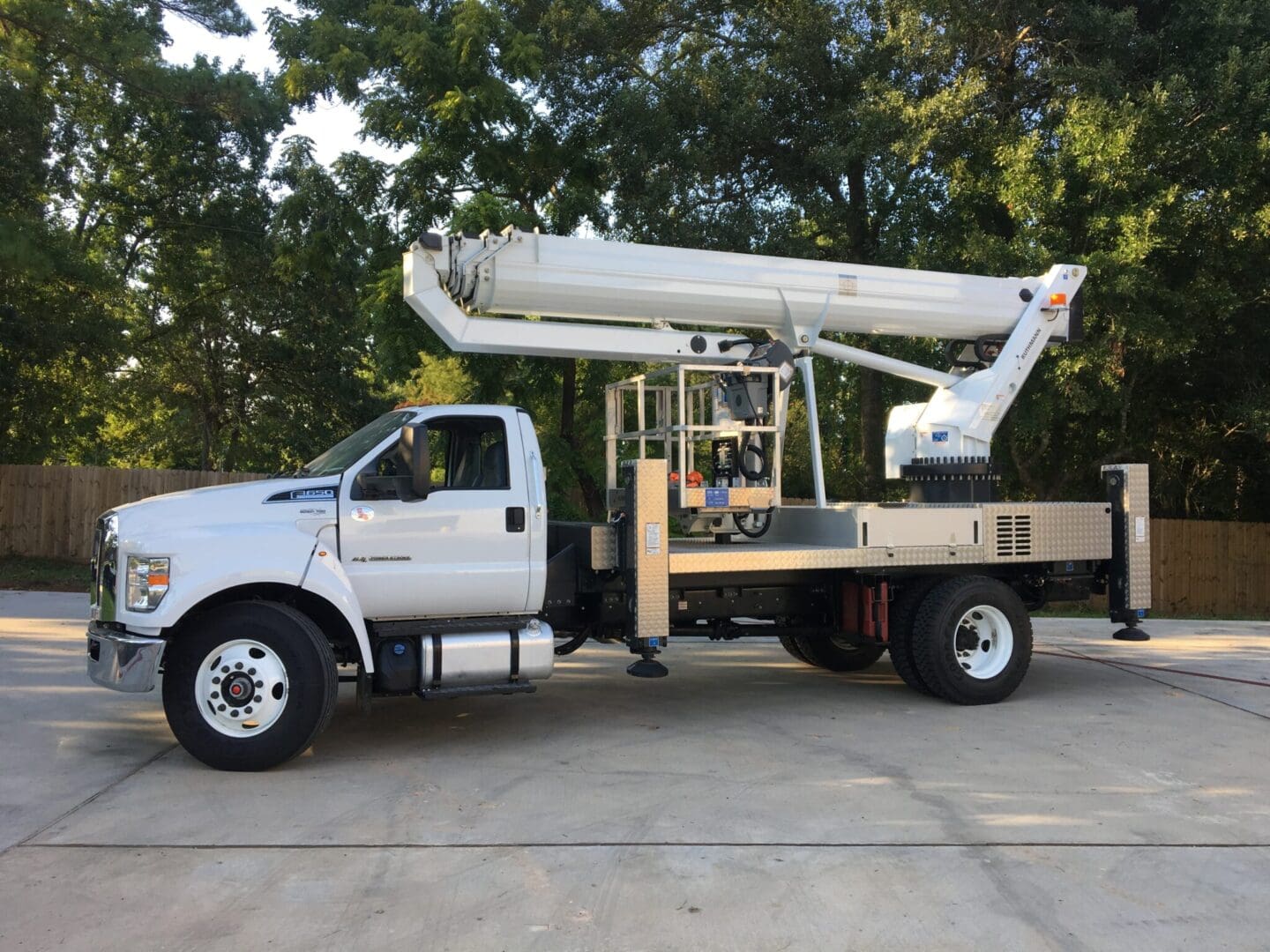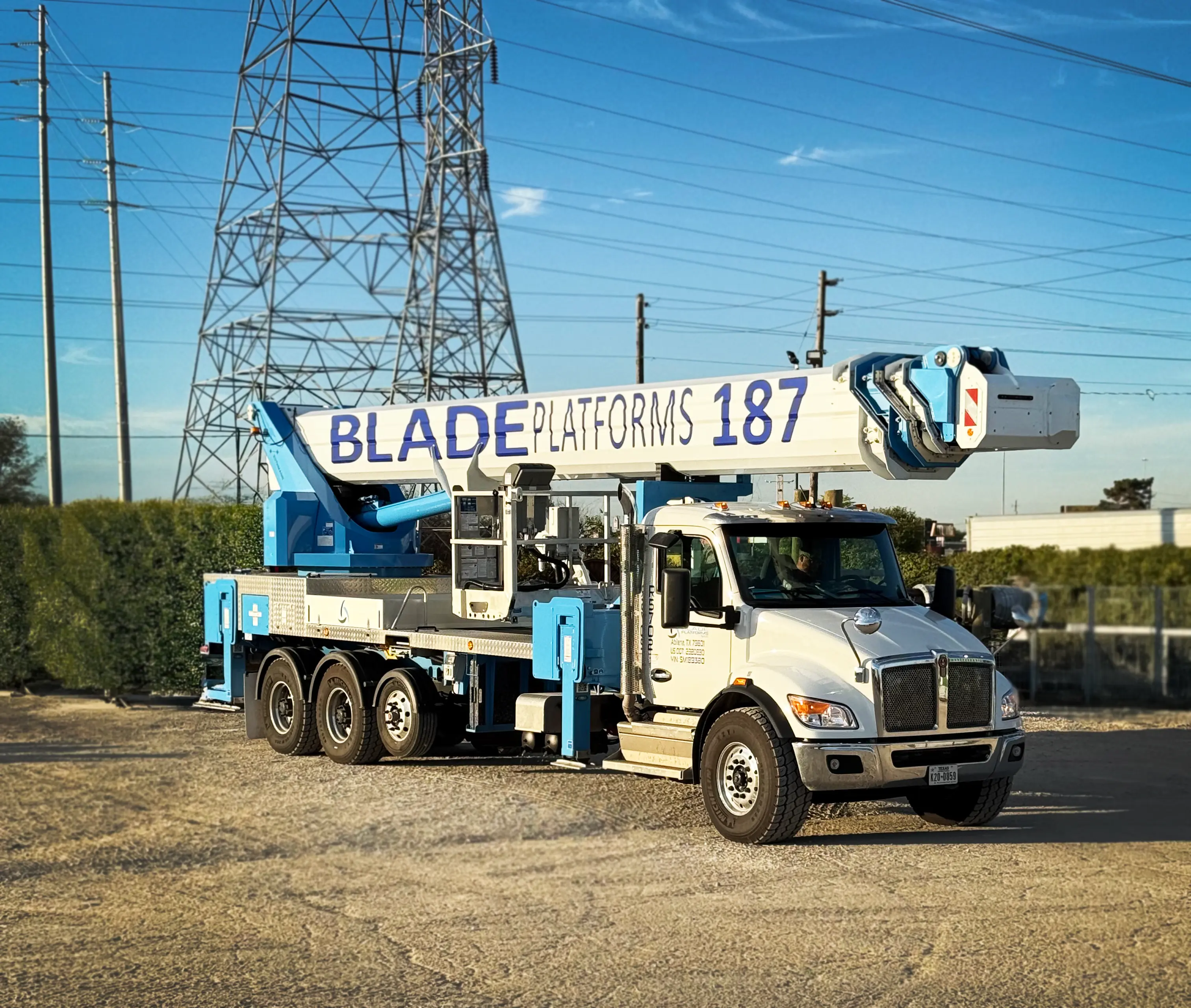
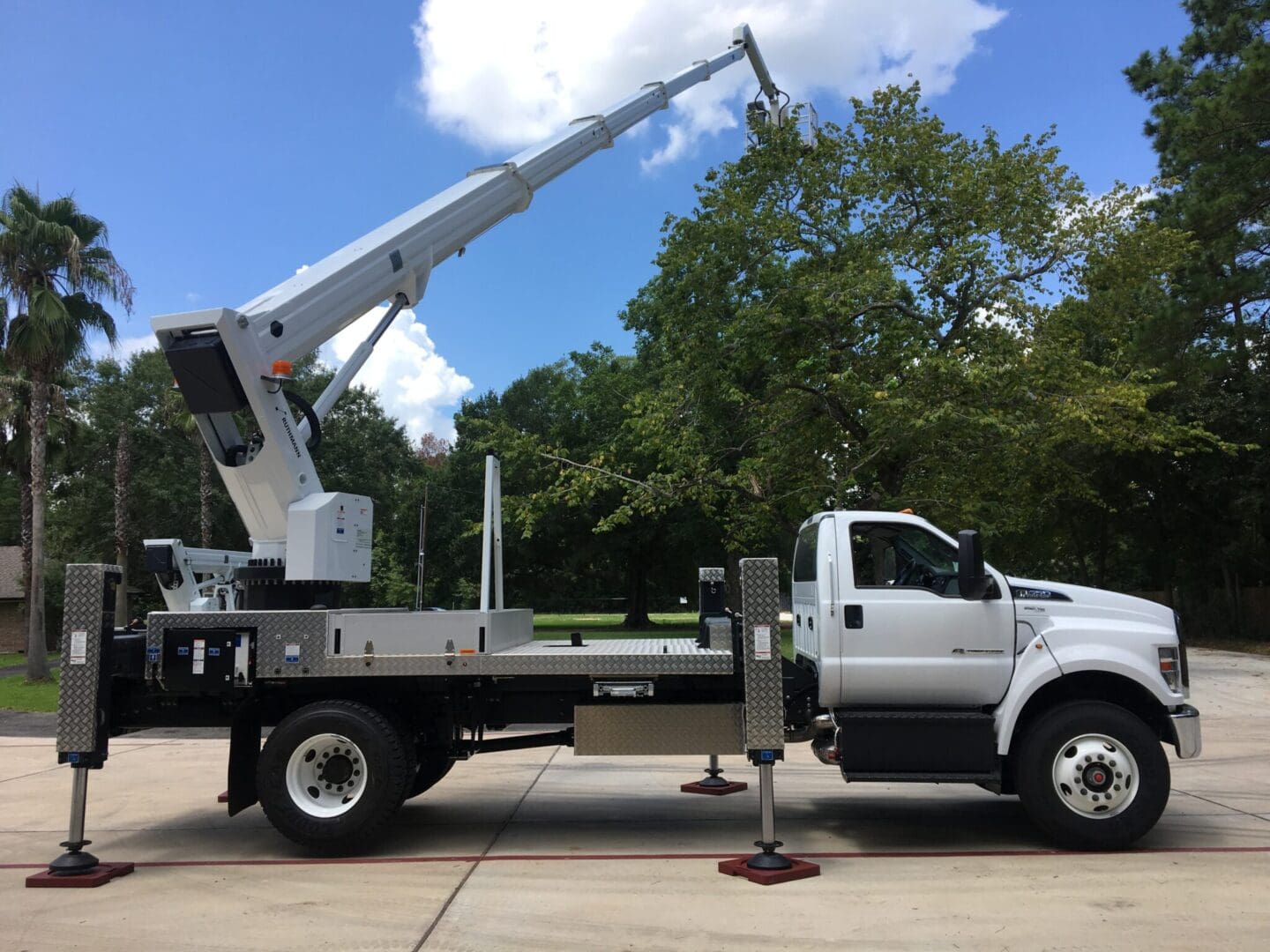

In the aerial platform world, maximum height often dominates the conversation. But in real utility work, height alone does not determine performance. Stability, control, and structural integrity under real-world conditions are what truly define a platform’s value.
At Blade Platforms, we provide engineered, professional-grade high-reach aerial work platforms, also known as mobile elevating work platforms, that deliver faster setup, smarter controls, and fewer delays without ever compromising safety. That commitment shows up most clearly in how Blade platforms are engineered to perform when conditions are less than ideal.
The Difference Between Reach and Stability
Any platform can be designed to reach impressive heights on paper. The real question is how it behaves when wind picks up, loads shift, and operators are performing detailed work at full elevation.
Blade platforms are engineered with structural rigidity and balanced weight distribution as core design priorities. This ensures that when crews are working at height, the platform feels stable and predictable rather than flexible or reactive.
For operators, that stability means more precise control and less physical and mental strain while performing complex tasks.
Managing Wind Load at Height
Wind is one of the most underestimated forces affecting aerial work. Even moderate gusts can introduce movement that slows productivity and challenges operator confidence.
Blade’s engineering approach accounts for wind load as a real operational factor, not an afterthought. Structural design, material selection, and platform geometry all contribute to reducing unwanted movement and maintaining control at elevation.
The result is a platform that remains composed in conditions that might sideline lesser equipment.
Structural Rigidity Where It Counts
Flex in a boom or platform may seem minor at lower elevations, but at full reach it can become a significant operational issue. Excess movement affects precision, increases task time, and can introduce safety concerns.
Blade platforms are designed for rigidity throughout the structure, minimizing deflection and maintaining alignment even under demanding loads. This gives operators a stable working environment that supports accurate, efficient task execution.
Balance and Control Optimization
True performance at height requires more than a strong structure. It demands intelligent balance and refined control systems that work together.
Blade platforms are engineered to maintain consistent balance across a wide range of operating positions. Combined with responsive, intuitive controls, this allows operators to make precise movements without overcorrection or hesitation.
That level of control is critical for utility work, where small adjustments often make the difference between smooth progress and repeated repositioning.
Designed for the Conditions Crews Actually Face
Utility and infrastructure work rarely happens in perfect environments. Crews operate near roadways, in uneven terrain, around existing structures, and under schedule pressure.
Blade’s design philosophy reflects these realities. Every engineering decision is grounded in how the platform will perform in the field, not just how it looks on a specification sheet.
By focusing on stability, wind performance, structural integrity, and control, Blade delivers platforms that excel where real work happens.
Media Contact:
Petr Bartusek
Commercial Vice President
(855) BLADE-US
https://www.bladeplatforms.com/